You may be reading this because
- Your scans show cancer in a few places in the lung, liver, lymph nodes, bone, spine or adrenal gland
- You have been told your cancer has spread, and you want to know whether the spots can be treated directly rather than with drugs alone
- You are on drug treatment and a single spot has grown or appeared while the rest is under control
- You had cancer treated in the past and a small number of new spots have appeared on a scan
- Your oncologist has mentioned SABR or MR-Linac and you want to understand what it means before you decide
What happens next
Scans reviewed
Send your scan reports ahead, or bring them. Dr Harinarayanan will usually ask to see the images themselves, not just the report, because the decision depends on exactly where each spot sits and what is next to it.
An honest view on suitability
At the consultation, at Spire Southampton, he tells you whether treating the spots directly makes sense for you, and if so whether a CT-guided machine or the MR-Linac would serve you better. If drug treatment or surgery is the better option, he says so.
Planning and treatment
Your case goes to the team meeting. Then a planning scan is done, and treatment follows as a short course, typically three to eight sessions. CT-guided SABR is at GenesisCare Southampton; MR-Linac SABR is at Cromwell Hospital in London, GenesisCare Guildford or GenesisCare Oxford.
Follow-up shared with your team
Scans afterwards show how each treated spot has responded. The results go to your existing oncologist if you have one, so your overall plan stays joined up. He stays involved for as long as you want him to.
What oligometastatic cancer means
When cancer spreads from where it started to another part of the body, each new spot is called a metastasis. For a long time, any spread was treated the same way: with drugs that travel through the whole body, because it was assumed there were many spots too small to see.
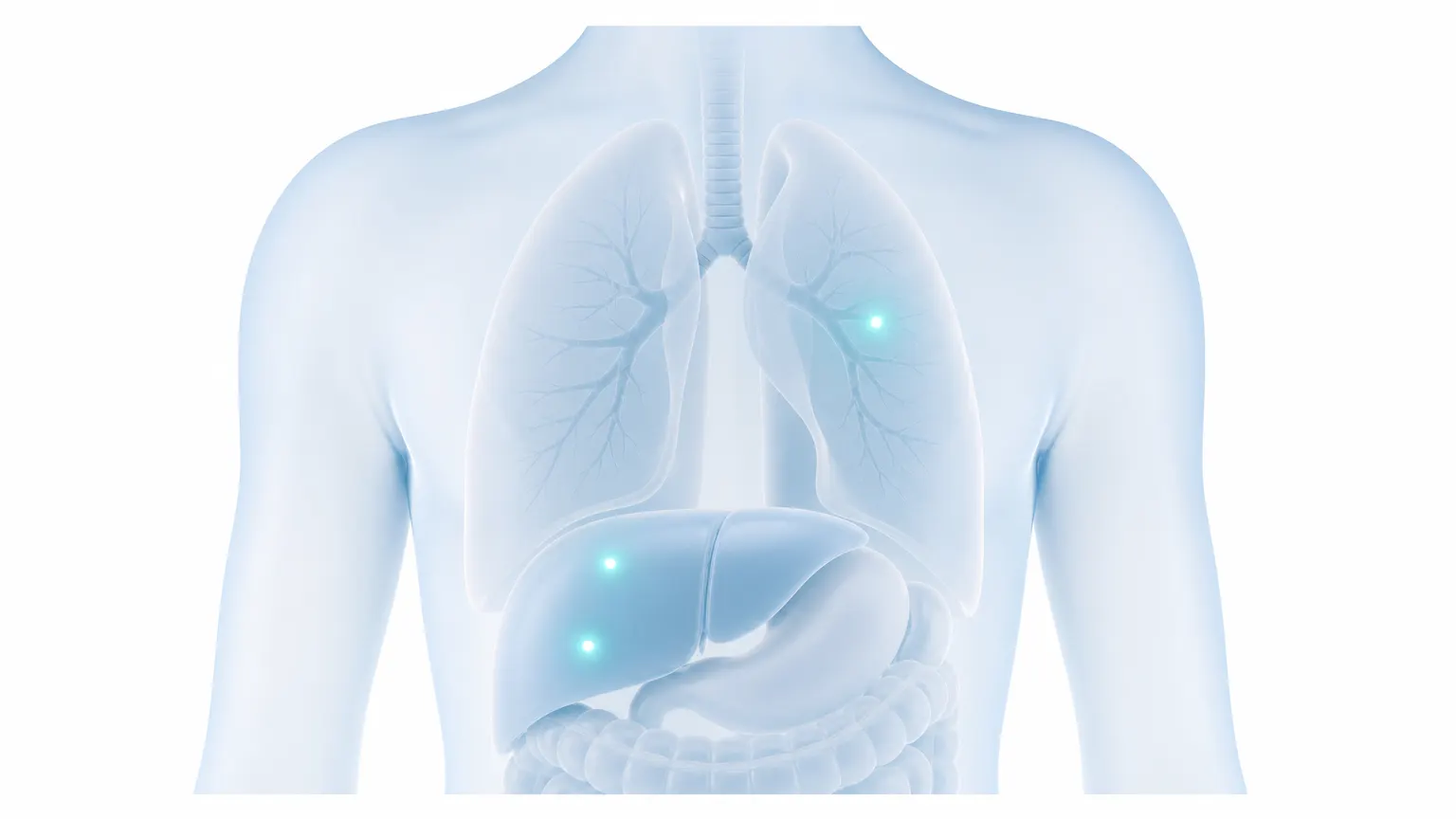
Oligometastatic cancer is the name for a middle ground. “Oligo” means few. It describes cancer that has spread, but only to a small number of places, and often slowly. The spots are usually in the lung, the liver, lymph nodes, bones, the spine or the adrenal glands. The idea, now supported by research, is that cancer in this state may be worth treating spot by spot, with the aim of controlling each one directly.
How many counts as few, and whether your cancer fits, depends on the cancer type, how it has behaved over time and how well you are. Dr Harinarayanan will read your scans and give you an honest view.
Why treating each spot can make sense
Drug treatment reaches everywhere but hits nothing hard. Surgery removes one spot but is a major operation. SABR, stereotactic ablative radiotherapy, sits between the two: a very high dose of radiation aimed precisely at one spot, from many angles, over a few visits, with the aim of destroying the cells it hits while sparing what is around them.
For some people, treating the spots this way means drug treatment can be delayed or paused. For others, it deals with one spot that is not responding while the rest is controlled. And for people who have already had a great deal of treatment, it offers something targeted without the toll of another course of chemotherapy.
Which areas can be treated
Lung spots are among the most commonly treated with SABR. The main challenge is breathing movement, which planning accounts for.
Liver spots sit close to the stomach and bowel, which are sensitive to radiation. This is where MRI guidance earns its place, because it shows those soft tissues clearly on the day. This applies whatever cancer the spread started from: when cancer has spread to the liver and surgery to remove it is not possible, MR-Linac SABR can still be an option for a limited number of metastases in the liver or the lung.
Lymph node spots in the abdomen and pelvis are often surrounded by bowel, and again the ability to see and adapt matters.
Bone and spine spots can be treated with SABR to control the cancer and ease pain, with care taken to protect the spinal cord.
Adrenal spots, in the small glands above the kidneys, sit near the kidney, bowel and stomach and are treated with the same precision.
SABR and MR-Linac SABR: the two ways he delivers it
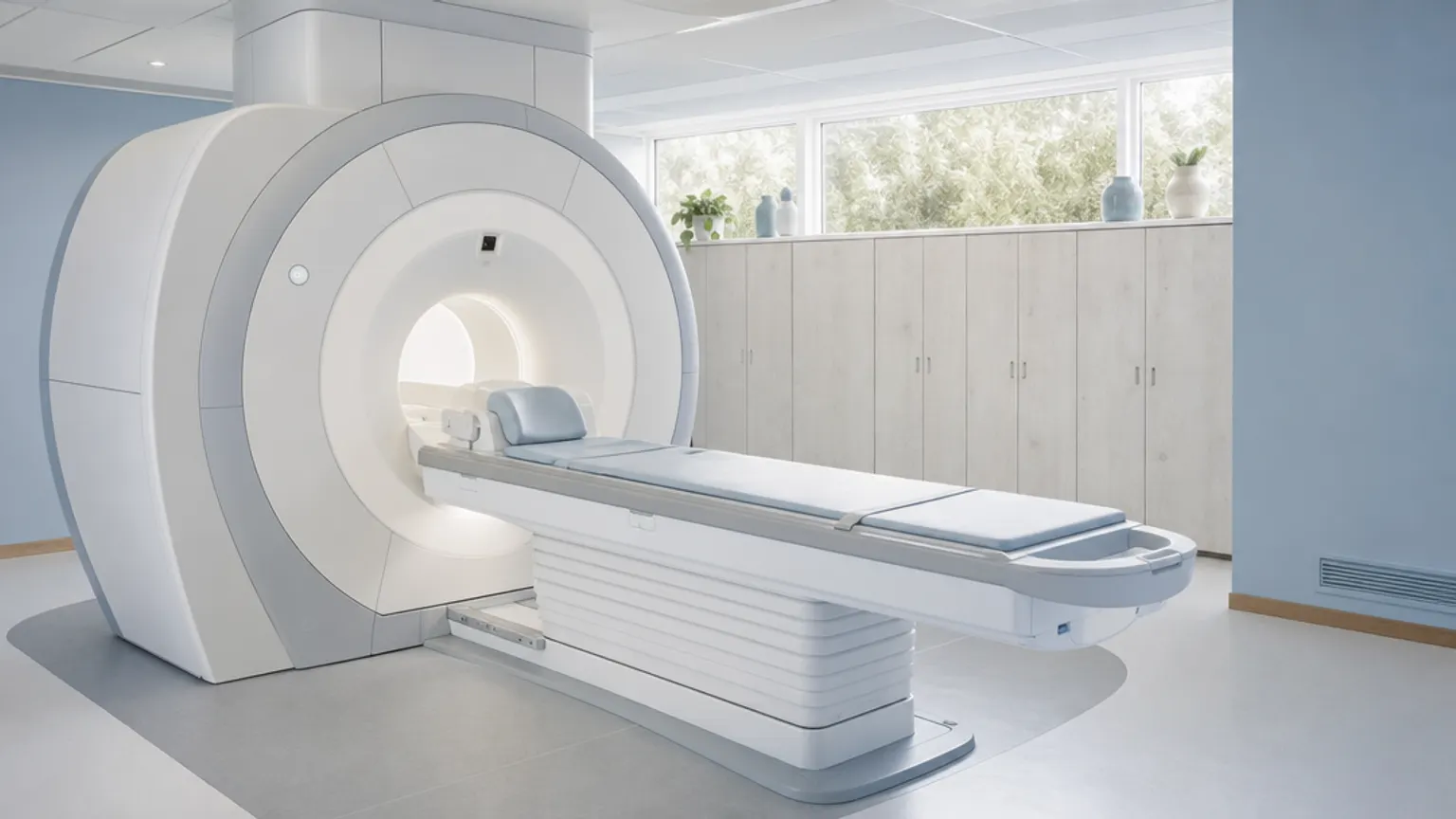
Dr Harinarayanan delivers SABR on two kinds of machine. A standard CT-guided linear accelerator uses X-ray pictures to line you up, shows bone well, and is delivered at GenesisCare Southampton, close to home. An MR-Linac has an MRI scanner built around the treatment machine, shows soft tissue in detail, can adapt the plan each day and can pause the beam if the target moves. He holds MR-Linac SABR accreditation from GenesisCare UK and treats on their machines at three centres: Cromwell Hospital in London, GenesisCare Guildford and GenesisCare Oxford.
Which machine suits you depends on where the spots sit. He recommends one and explains why.
Who it may not suit
Spot-by-spot treatment is not right for cancer that has spread widely, for spots too large to treat safely, or for cancer that is changing quickly on scans. In those cases drug treatment, or sometimes surgery, is the better choice, and he will say so. It is also not a replacement for the care of your existing oncologist. He works alongside them and shares every result.
He does not promise outcomes. Results depend on the cancer and the person, and he will tell you what the evidence says for your situation.
For referring clinicians
Dr Harinarayanan accepts referrals for oligometastatic and oligoprogressive disease for SABR and MR-Linac SABR: lung, liver, nodal, bone, spine and adrenal metastases, from any primary, up to three or four sites, and locally recurrent pelvic disease. Cases where soft-tissue proximity, motion or prior irradiation limits a CT-based plan are particularly suited to the MR-Linac.
Please send a referral letter with the primary diagnosis, stage and histology, treatment to date including systemic therapy and prior radiotherapy, the most recent imaging (CT, MRI and PET-CT where available), the MDT outcome and the patient’s funding route. Letters and scans go to his secretary at Ann.Clay@uhs.nhs.uk, or use the referral form on the clinicians page. He aims to reply to referrals promptly. He is glad to discuss suitability informally before a formal referral.
How Dr Harinarayanan treats it
MR-Linac SABR
MR-Linac SABR is radiotherapy given on a machine with an MRI scanner built in. The scanner shows the tumour and the healthy tissue around it while you are being treated, so the dose can be aimed tightly and the plan adjusted for that day. Dr Sathish Harinarayanan is accredited by GenesisCare UK to deliver it and treats patients on the MR-Linac at three GenesisCare centres: London, Guildford and Oxford.
Read more →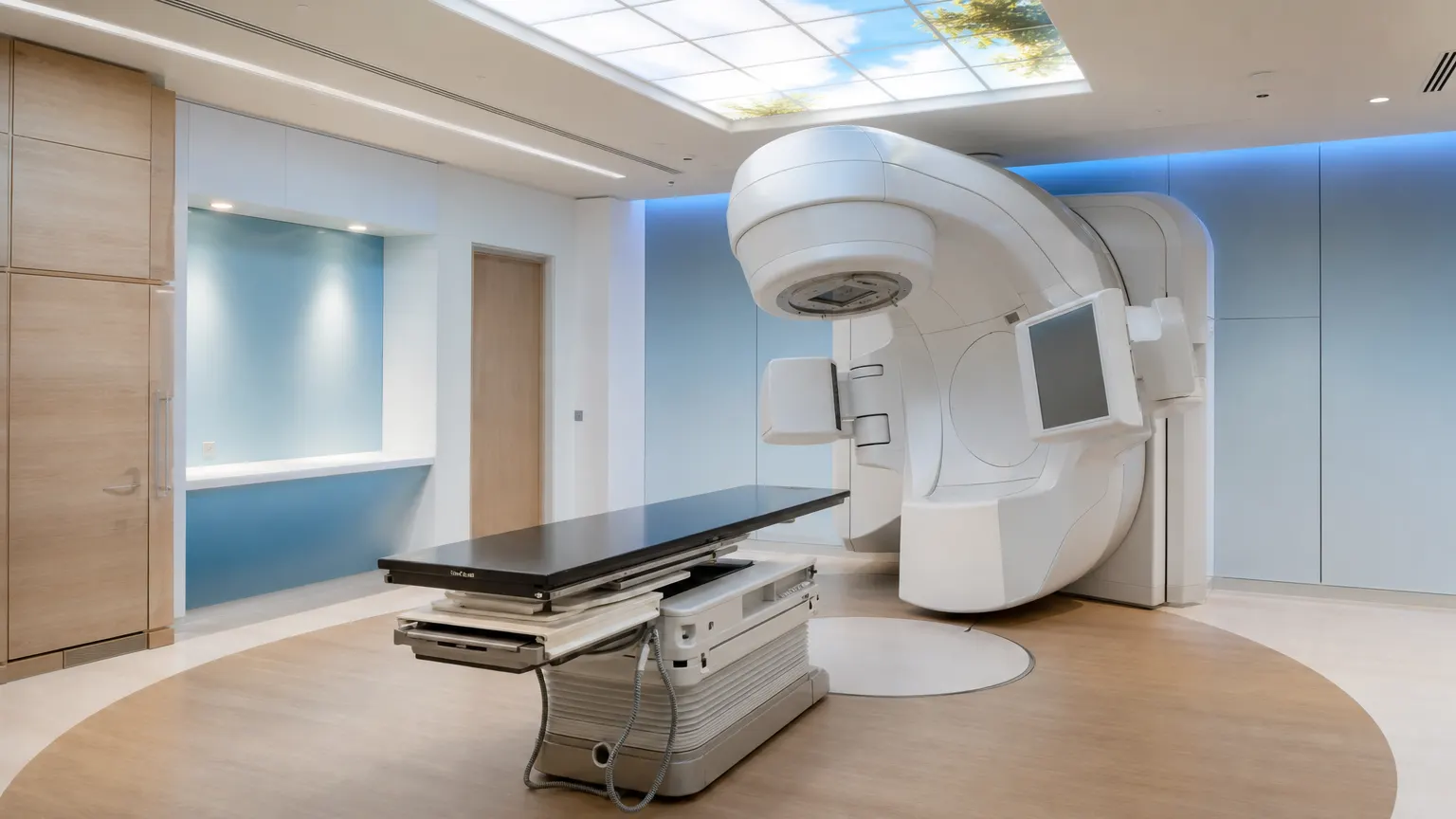
SABR, stereotactic ablative radiotherapy
SABR stands for stereotactic ablative radiotherapy: a short course of very precise, high-dose radiotherapy aimed at a small, well-defined tumour. It is an established treatment across the UK for small cancers and for cancer that has spread to a few places. Dr Harinarayanan uses CT-guided SABR at GenesisCare Southampton and MRI-guided SABR on the MR-Linac at GenesisCare's London, Guildford and Oxford centres.
Read more →Conditions this applies to
Common questions
What does oligometastatic mean?
It is a medical word for a cancer that has spread from where it started, but only to a small number of places. Oligo means few; a metastasis is a spot of cancer that has travelled. The idea behind the word is that cancer with a few spots behaves differently from cancer that has spread widely, and may be worth treating spot by spot rather than with drugs alone. How many counts as few depends on the cancer and on the person.
Which parts of the body can be treated?
Spots in the lung, the liver, lymph nodes, bones, the spine and the adrenal glands are the ones most often treated with SABR, and the ones Dr Harinarayanan treats on the MR-Linac. Where a spot sits close to something sensitive, such as the bowel, the stomach or the spinal cord, the MRI guidance of the MR-Linac lets the team see it clearly on the day and shape the dose tightly around it.
Is SABR instead of chemotherapy, or as well as it?
It can be either, and the answer depends on your cancer. For some people, treating the spots directly means drug treatment can be delayed or paused. For others, SABR is given alongside drug treatment to deal with one spot that is not responding while the rest is controlled. Dr Harinarayanan will explain which applies to you and why, and he works alongside your existing oncologist rather than replacing them.
How many spots can be treated?
There is no fixed number that applies to everyone. What matters is how many there are, where they sit, how big they are, how the cancer has behaved over time and how well you are. A person with a few spots that have been stable for months is in a different position from a person whose scans show new spots appearing quickly. He will read your scans and give you an honest view rather than a rule.
What does treatment feel like and how long does it take?
You lie on the treatment couch while the machine takes pictures and then delivers the dose. You feel nothing. Each session is longer than a standard radiotherapy visit because the team checks your position carefully, and on the MR-Linac adapts the plan to your scan that day. The course is short, typically three to eight sessions rather than several weeks. Side effects depend on the area treated and are usually mild.
Does this apply to cancer that started in the prostate or kidney, not just bowel cancer?
This applies whatever cancer it started from. Oligometastatic treatment with SABR is not limited to one starting point. Dr Harinarayanan accepts referrals for a small number of spots that have spread from any primary cancer, including the prostate and the kidney, as well as from bowel cancer, his own specialty. What matters for suitability is how many spots there are and where they sit, not which cancer they started as. He is not a prostate or kidney cancer specialist and will not treat the primary tumour itself, but he does treat the spread from it when SABR is the right tool.
Is this treatment available on the NHS?
SABR is available on the NHS for a number of cancers and situations. MR-Linac SABR, the MRI-guided version, is not routinely funded on the NHS. The one exception is GenesisCare Oxford, which has a limited NHS contract and treats a small number of patients there on a compassionate basis; everywhere else Dr Harinarayanan delivers it privately. He is an NHS consultant at University Hospital Southampton and will tell you plainly what the NHS can offer for your situation, so that you can weigh the options with the full picture.